Home/Apartment Blocks
Apartment Blocks
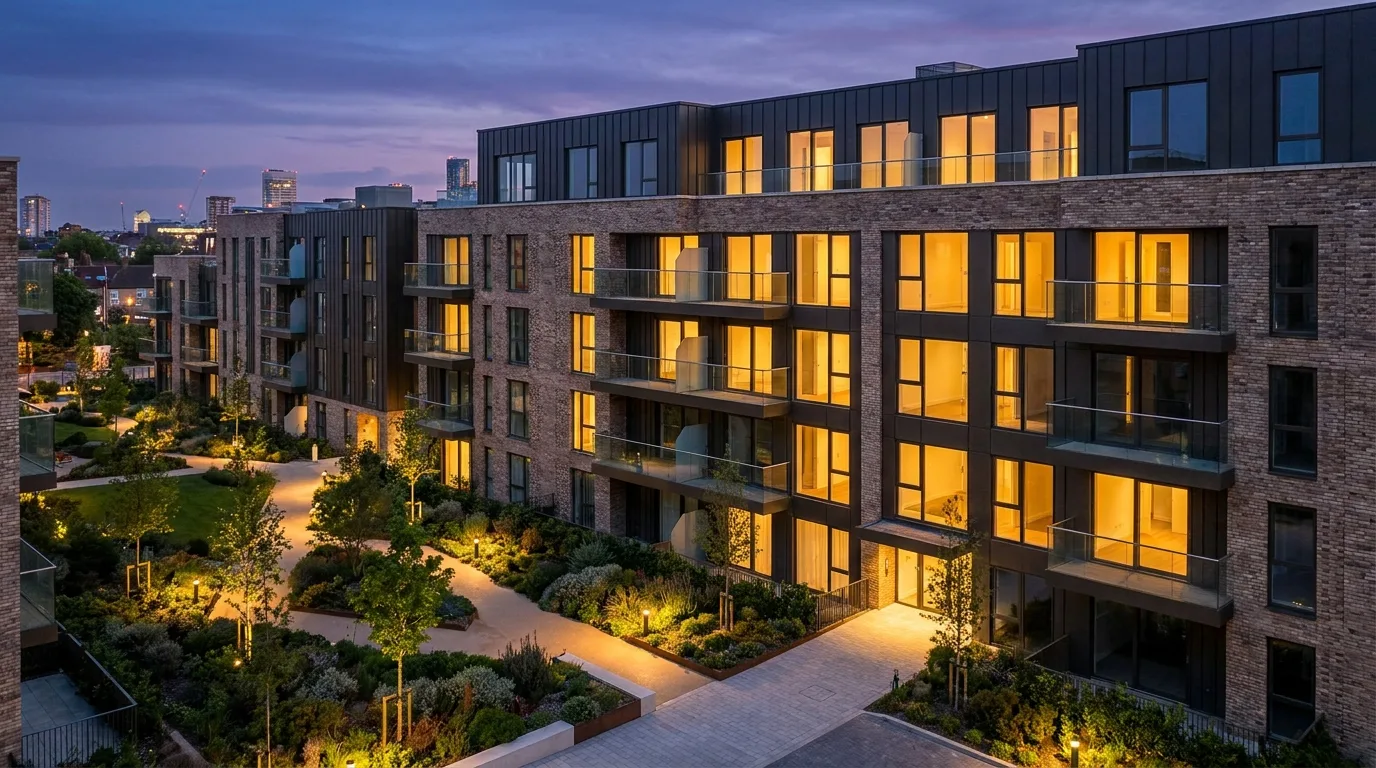
A whole block, before it goes to market.
Freehold blocks, completed phases and converted buildings. One company let agreement across the building, full management unit by unit, or a quiet sale to investors on our list — settled with you and written down.
The Options
Three ways to handle a block.
One agreement for the building
The whole block on a single company let agreement: one lessee, one payment date and one inventory, with the void risk sitting with us. A phased start is often the sensible structure on a larger building. Block lettings in detail →
Full management
Each flat run as serviced accommodation, priced night by night and reported on one monthly statement for the building, from 20% of booking revenue. Block management in detail →
A quiet sale
Register the block for sale off-market and it is introduced to investors on our list. No listing and no fee to you; the buyer pays our fee. How the off-market route works →
Why One Agreement
Twenty flats, one counterparty.
Letting a block flat by flat means twenty agreements, twenty move-ins and a void somewhere every month. A single company let agreement replaces that with one relationship. The condition of every flat is recorded at handover, the handback standard is agreed at the start and the rent arrives from one payer on one date.
- One lessee, one agreement, one monthly payment
- A schedule of condition for every unit at handover
- Service charge, insurance and repair responsibilities set out clause by clause
- Break provisions agreed up front if you may want to sell

What We Look At
What a block needs before we take it on.
A block is a bigger commitment on both sides, so the paperwork does more of the work. These are the things we ask about first.
- The title and any lender. Where there is a charge, written lender consent that names the use we would make of the building
- Insurance. A buildings policy that permits the use, confirmed in writing by the insurer
- Fire safety. A current fire risk assessment for the common parts and the alarm, emergency lighting and fire doors it relies on
- Planning and use. The lawful use of the building and any condition that restricts how the flats may be occupied
- Leases and service charge. For a building with long leaseholders, the leases and the managing agent's position
Tell Us About It
Send us the details.
The town or postcode, the type of property and what you want to happen. We will come back to you about next steps.
- No fee to talk and nothing to sign
- Details shared only with your agreement; a mutual NDA on request
- Terms agreed in writing before anyone commits
Prefer to talk? 02477 450677 or WhatsApp us — Mon–Fri 9–6, Sat 10–2.
Your Questions
Blocks, answered.
How many flats does a block need to have?
There is no minimum. A converted house with four flats and a purpose-built block of forty are both conversations we have; the structure changes with the size, not the principle.
Can we keep selling flats while you have the block?
Yes, if it is planned for. Break provisions let individual flats come back for a sale on an agreed notice period and the rent adjusts as they do.
Who looks after the common parts?
It depends on the agreement and it is written down before signing. On a whole-building company let the common parts usually sit with us; where there are long leaseholders, the managing agent keeps them.
Does it matter if some flats are occupied?
For a company let or management we need vacant possession of the flats we take on. Occupied flats can stay outside the agreement, or the block can go on the off-market sale register as it is.